Lies, damned lies, and complexity
We built the first cloud in Europe and replaced the hypervisor in 30 days when Oracle pulled the licences. Most of what gets called complexity is just ignorance with a talking point attached.
A position, straight. No wink, no irony.

Allan Degnan
Technical Director
16 May 2024 — 7 min

I was extremely lucky in my early career to fall into interesting work.

Gotta build you brand, yo
Gotta build your brand, yo
After reading the 1000 A4 page Xen manual handed to me by Philipp Huber, I wrote the scheduler for the first cloud in Europe.
function decisionEngine($dbh) {
    $stmt = $dbh->prepare("SELECT id
                           FROM nodes
                           ORDER BY memory
                           LIMIT 1");
    $stmt->execute();
    foreach ($stmt as $row) {
        return $row;
    }
}
And history was made.
Story time
Longer version of the story, and I’m not even sure how much of this is true. I joined XCalibre Communications Ltd when I was 22, thanks to a wee bit of nepotism from my favourite brother-in-law Jordan Nisbet. I quickly found myself working on FlexiScale, the utility elastic computing platform, before the term cloud was actually coined.
There were people who came before me.
- Rob Lazzurs, also a child at the time, was the architect of the system. Impressive bastard. Absolutely dominated him at UT99 during the Christmas lull though. Noob.
- Colin Petrie, who I think runs the internet now, only he ran our internet back then. He was the one to fix the router after I accidentally PXE booted the office. Taught me how to write the networking code without actually writing any code.
- Iain Watson. Walked me through how to PXE, how to rack, and how to manage servers. Gave me cabling OCD. I think Iain was probably the glue holding the team together. Also, his kid had a big poop and split his bum. Harrowing…
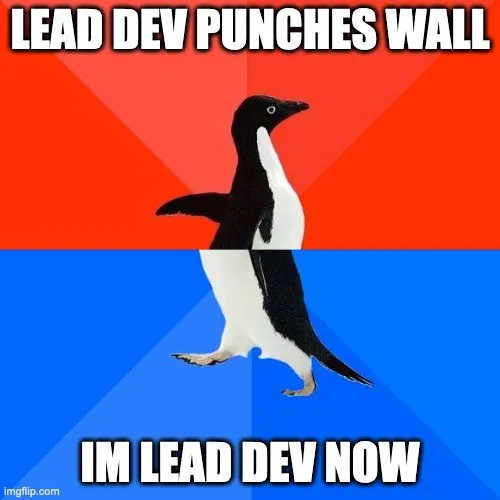
- wrote most of the bespoke code that made the thing an actual product. After a spirited disagreement he punched a wall, made his exit, and never returned.
we did it!
Everything was going well until the incident. No, not that one, I’ll write about that later — the one where Oracle buys your scheduler and then refuses to sell you any more licences.
Shit.
Big Boss Tony Lucas says replace Virtual Iron in 30 days and I’ll give you all a grand. And so we did.
Without a doubt the best job I’ve ever had.

Buh Bye, VI
Trivia
So here I am in the 2020s, basically the modern day Tim Berners-Lee, having an interview for a fairly pedestrian platform engineering role — oh how the mighty have fallen — and they’re asking me some of the typical questions you might get asked.
Tell me the pros and cons of ECS vs Kubernetes
And I know what they want me to talk about. It’s complexity. And I can’t give them that answer. Because it’s wrong.
As fortune would have it, I recommended a colleague for the role and he got it. Some months later, needing more capacity, he vouched for me and got me another round. He prepped me, told me what they did, who was who, and what they liked.
The interview went really well. I bounced off the interviewer. We melded minds. You know, where you each know the other has the experience of doing shit, and you can respect their opinions even if they don’t perfectly align with your own.
Enter stage right, some kid. He was rude, egotistical, and about 30 minutes late to the interview. He asked me one question.
Tell me how you like to use argocd
And I knew the answer he wanted me to give. But I couldn’t. Because I didn’t agree with it.
But diversity is a good thing, right? Unless, of course, it’s diversity of opinion, knowledge, or experience.
I touched on trivia in my previous article.
At best, given infinite subject matter, trivia questions are a lottery — or a punishment for having the audacity to put a subject on your CV. Worst case, the ego of an ignorant interviewer rejects the better answer, or takes licence to pick at the scab of a miss, rather than try to figure out what you do know.
Everyone thinks they do it well. Few do.
Memes
Let’s go back a bit and revisit the kubernetes complexity meme. Things you need to configure to run a service in ECS vs EKS.
- ECS: Cluster, Task (Fargate), Service, DNS, Loadbalancer, Security Groups
- EKS: Cluster, Deployment (Fargate), Service, DNS, Loadbalancer, Security Groups
Super different, eh?
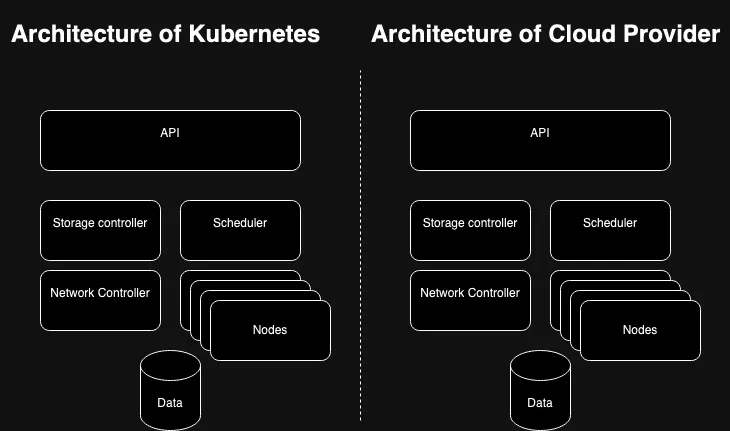
Alright, alright, I get it. People are talking about the kubernetes architecture being complex…
Spot the difference
So I’ve glossed over some details. The syntax is different, and the important thing is you already know the cloud architecture. Learning new things is hard, and you know, they manage it for you, hide some of that complexity, so when it’s doing something weird, you have no way to actually debug the thing.
Instead you just stare into the void of the opaqueness of their shitty dashboard.
That’s a… win… right?
Discourse
There are two things going on here:
- There’s a configuration vs convention argument. Whilst default EKS is a pretty simple offering, similar to ECS, you can customise the shit out of it. You can replace the CNI, the CRI, you can run your own node groups, you can run serverless workloads. Shit, you can basically install a bunch of third-party services and define your own platform. Information overload! But it’s not actually a configuration vs convention argument; it’s configuration and convention vs one way to do things with proprietary lock-in. That in itself would be fine, if not for the fact that ECS is largely an inferior product.
- Anti-intellectualism. You ever watch Bridget Jones’s Diary? Well, I walked into a bar in 2013 and now I accidentally have a wife, so I tend to think of life lessons in terms of millennial chick flicks. It’s the scene where she meets the posh people and she talks about Chechnya. This is where we are right now. Everyone’s memorised the talking points but nobody really knows anything about it. Therapy time. It’s okay to not know everything. It’s okay to defer to someone with experience. The loudest voices don’t have all the answers. If you just wait a second and listen, today you could be one of the lucky 10,000.
These arguments persist because we don’t look at things how they really are. Somehow we view these systems as magical achievements which only the big bad vendor can deliver. Thus we create a narrative that such things are beyond our reach, and we lurch from vendor to vendor, creating disaster after disaster.
We call it complexity, but it’s actually just ignorance.
Final thoughts
Building FlexiScale was a beautiful place in time and space.
When Oracle put a gun to our heads we didn’t meme complexity, we didn’t say it wasn’t possible, we didn’t go begging to another vendor.
We looked at the problem, designed the simplest architecture that worked, and we replaced Virtual Iron with something that was significantly more performant, significantly simpler, and significantly more malleable.
We did it in 30 days. And it wasn’t even difficult.
I think back to that time a lot. It took me about 10 years to really understand what we had in that moment. In 15 years experience across 20 companies, I don’t think I’ve ever experienced it again.
We had an Engineering Culture.
Agenda
You know the market is shit when everyone is on LinkedIn building their brand. Would they be here if they were doing interesting work?
The problem is this brand building is destroying the thing we covet, you know, besides money.
- You can’t have it when you have to be right, even when you’re wrong.
- You destroy it when your views are coloured by memes with no substance.
- You snuff it out when you deny expertise.
- It doesn’t exist when you have to be the hero of the story.
- It’s lost when you don’t listen.
And that’s sad, because it really was a beautiful moment.
I want it back.
I need it back so bad I’m willing to do better.
And all I’m asking is for you to do the same.
1,429 words — 16 May 2024